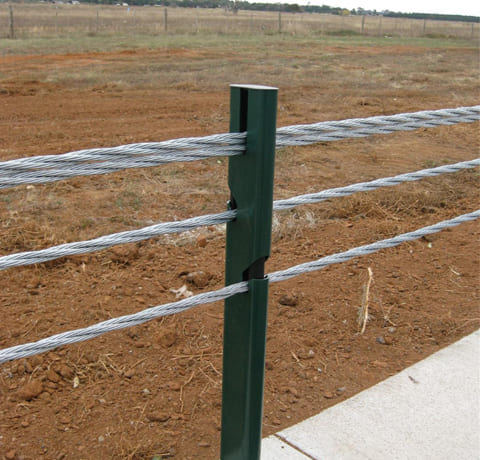

Test Level 3 (TL3) End Terminals: TL3 terminals are engineered to absorb impact energy, thereby mitigating the risk of vehicle launching or snagging. A common strategy is the controlled release of cables at the end anchor upon impact.
Wire rope safety barriers are crucial elements in highway infrastructure, designed to enhance road safety by redirecting vehicles upon impact. The choice of terminal type plays a pivotal role in ensuring the effectiveness of these barriers. Three main terminal options are commonly utilized: Standard End Terminals, Test Level 3 (TL3) End Terminals, and Non-Release Terminals.
Standard End Terminals: These terminals are fundamental components providing longitudinal support to the wire rope safety barrier. While they effectively prevent snagging and vehicle launching, they have not undergone full-scale crash testing. They are typically employed on the departure sides of wire rope safety barriers, away from opposing traffic zones.
For instance, FLEXFENCE employs posts with reduced spacings to minimize the angle of cable termination, reducing the potential for vehicle rollover and launch.
Non-Release Terminals: A recent innovation in terminal design, non-release terminals are TL3-approved and have demonstrated the ability to retain cable tension during full-scale crash tests. This feature ensures continuous functionality of the barrier system, even in the event of secondary impacts downstream from the end anchor. Particularly valuable in median applications with high traffic volumes and a history of crossover accidents, non-release terminals maintain barrier effectiveness without requiring immediate attention after nuisance impacts.
In summary, the selection of wire rope safety barrier terminals is crucial for optimizing roadside safety. Standard End Terminals provide basic support, TL3 End Terminals offer enhanced impact absorption, and Non-Release Terminals ensure continuous functionality, especially in high-traffic areas prone to crossover accidents. Each option serves a specific purpose in safeguarding motorists and minimizing the severity of collisions on our roadways.